


NAICOM Seeks Strong Institutions, Collaboration in Insurance Sector

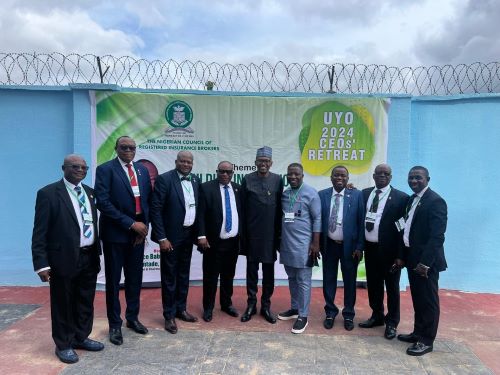
The Commissioner for Insurance, Mr. Olusegun Ayo Omosehin, who was represented by the Deputy Commissioner, Mr. Ekerete Olawoye Gam-Ikon, attended the 2024 Nigeria Council of Registered Insurance Brokers (NCRIB) CEO’s Retreat held from June 13-15, 2024 in Uyo, Akwa Ibom State. The retreat was themed “Building Institutions That Survive Their Promoters.”

In delivering the goodwill message, the Deputy Commissioner emphasised that in today’s rapidly changing world, the concept of building enduring institutions is more relevant than ever. Institutions that outlive their founders represent sustainability, resilience and continuous excellence, becoming pillars of strength for our communities and guiding us through times of change and uncertainty.

He further noted that at NAICOM, there is a deep commitment to creating lasting legacies. This commitment is built on robust governance, innovation, and an unwavering dedication to ethical practices. These principles not only ensure the longevity of institutions but also foster trust and confidence among stakeholders.

The Deputy Commissioner highlighted the crucial role insurance brokers play in this endeavour. As intermediaries who facilitate critical financial protection, brokers are instrumental in promoting stability and security whose efforts contribute to a safer and more predictable environment for businesses and individuals alike. He expressed confidence that the discussions and insights shared during the retreat would illuminate strategies and best practices to ensure that the institutions built today will thrive for generations to come.

In conclusion, he urged everyone present to use the opportunity to collaborate, learn from each other and reinforce the insurance industry’s collective mission to create a sustainable future.


Hot this week

AFRACA-NIRSAL Masterclass Builds Financial Institutions’ Capacity for Climate, AI-Driven Agricultural Finance

The African Rural and Agricultural Credit Association (AFRACA), in...

Shell Reinforces Safety Commitment at CEO Contractors Forum

Shell leaders and Contractor CEOs at the Annual Shell...

Guinea Insurance Receives New Licence from NAICOM Post-Recapitalisation

L-R: Ademola Abidogun, Managing Director/CEO, Guinea Insurance Plc and...

AXA Mansard Reports N7.8bn H1 Profit, Capital Base Meets Recapitalisation Threshold

AXA Mansard Insurance Plc has sustained its growth momentum...

AXA Mansard Health Int’l Health Plan Covers Cancer, Other Chronic Health Conditions

 Mr. Tope Adeniyi CEO AXA Mansard Health AXA Mansard Health’s International Healthcare...

Topics

Allianz Nigeria Delivers on 60 Minutes Motor Claims Settlement

  Allianz Nigeria makes good her promise to settle motor...

The N200bn ICT Bank, Strategies to Rescue Nigerian Telecom Sector 

By Elvis Eromosele The Nigerian telecommunications sector must have nine...

TVS King Deluxe Plus iTouch 3Wheeler Unveiled in Enugu, Asaba

L-R - Taiwo Akinpelu, Divisional Head of Marketing at Simba TVS; Chief...

Ghana Hosts Africa Funds, Asset Management Forum

The Africa Investment Funds and Asset Management – West...

400m People Lack Access to Healthcare

A report by the World Health Organisation (WHO) and World Bank Group shows that 400 million people do not have access to essential health services while 6% of people in low- and middle-income countries are tipped into or pushed further into extreme poverty because of health spending. “This report is a wakeup call: It shows that we’re a long way from achieving universal health coverage. We must expand access to health and protect the poorest from health expenses that are causing them severe financial hardship,” says Dr. Tim Evans, Senior Director of Health, Nutrition and Population at the World Bank Group.

The Bloody News from South Africa

When apartheid ended in 1994, the ANC promised to make black South Africans richer (Black Economic Empowerment). The lot of poorer blacks, however, has not improved much. Many are frozen out of the workplace altogether. The unemployment rate among blacks is 28.5%, compared with 5.6% for whites. If those who want work but have given up looking for it are included, the jobless rate is a whopping 41.6% for blacks compared with 7.5% for whites. The Economist, April 27, 2013.

‘Kari Qualified as Commissioner for Insurance’

Two classmates of Alhaji Mohammed Kari, Commissioner for Insurance,...

Farmcrowdy Secures $1m Funding for Agribusiness in Nigeria

Farmcrowdy, Nigeria’s first and leading digital agriculture platform which...






