Tuesday, January 20, 2026
30.5 C
Lagos

Luanda: Most Expensive African City for Expats in 2016

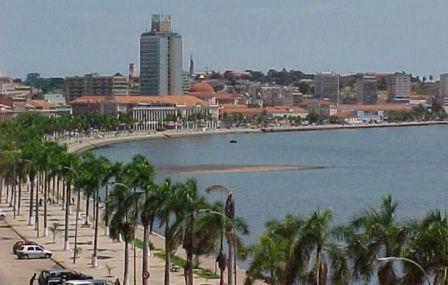
Luanda, the capital of Angola is the most expensive city in Africa for expatriates in 2016, according to a survey released on December 14 by ECA International. Worldwide, Angola’s capital moved from the fifth position in this ranking last year to the second this year.

In Africa, Luanda is followed by Kinshasa, capital city of the Democratic Republic of Congo, which is 10th worldwide. Next comes Khartoum (Sudan’s capital), which moved from the 53rd position worldwide in 2015 to 21st in 2016, as inflation in the country soared and due to the Sudanese pound being pegged to the dollar.

Libreville comes 4th in Africa in the ranking which lists 450 cities worldwide, ahead of Pointe Noire, Brazzaville, Conakry, Abidjan and Yaoundé. N’Djamena is the tenth African most expensive city. (See down for Top 20).

ECA’s cost of living survey is based on a set of basic consumption goods and services such as food, household items, costs of leisure, clothing, restaurants, alcohol and tobacco. Calculations are made in U.S dollars. Rent, public services, car purchase and school fees are excluded as they are usually covered by separate allocations.

Worldwide, Tokyo is the most expensive city for expats, ahead of Luanda, Zurich, Geneva, Yokohama, Basel, Nagoya, Bern, Osaka and Kinshasa.

Top 20 of most expensive African cities in 2016:

1- Luanda
2- Kinshasa
3- Khartoum
4- Libreville
5- Pointe Noire
6- Brazzaville
7- Conakry
8- Abidjan
9- Yaoundé
10- N’Djamena
11- Malabo
12- Freetown
13- Accra
14- Dakar
15- Harare
16- Bamako
17- Cotonou
18- Ouagadougou
19- Addis-Ababa
20- Nairobi


spot_img
spot_img
spot_img

Hot this week

Nigeria: Illicit Drugs and the Challenge of Addiction

By Christiana Daniel ‎Nigeria’s fight against illicit drugs has intensified...

Gospel Artiste, Titilope Baptist-Sanusi, Speaks on Her ‘I WON’ Album

Titilope Baptist-Sanusi, popularly known as Baptista (BaptistaOnMiC), is a...

IMF Projects 4.4% GDP Growth for Nigeria in 2026

Global economic activity is projected to remain resilient in...

Heirs Insurance Hackathon Opens: Nine University Students to Win N9m Innovation Prize

Heirs Insurance Group (HIG), Nigeria’s fastest-growing insurance group, calls...

Stockbrokers, Securities Dealing Houses Congratulate NGX on N100tn Market Capitalisation

The Chartered Institute of Stockbrokers (CIS) and the Association...

Topics

FG Commends Insurance Industry over N9bn Endsars’ Claims Payment

Zainab Ahmed Hon. Minister of Finance, Budget & National Planning SPEECH...

Africa, ME Tablet Market Declines 10% in 3rd Qtr

The Middle East and Africa (MEA) tablet market continues...

NSE Wins Outstanding Invaluable Company Award for CSR

The Nigerian Stock Exchange (NSE) is pleased to announce...

Ecobank Unveils Virtual Card for Online Payment

Ecobank has launched the virtual card, a digital payment solution for safe online payment, integrated...

#VisaFreeAfrica Initiative Introduces Writing Competition

#VisaFreeAfrica (VFA) recently introduced the 55 Voices for a...

Ecobank Digital Series: ‘Nigeria Will Take Full Advantage of the AfCFTA’

Chief Executive /Executive Director, Nigeria Export Promotion Council (NEPC), Segun...

BUHARINOMICS: Charting Path to Sustainable Economic Renaissance

The presidential election was over on Saturday, March 28, 2015. It is now a historical document for academic research and street political analysis. On March 28, CHANGE triumphed over TRANSFORMATION AGENDA, leading to the emergence of General Muhammadu Buhari as President, Federal Republic of Nigeria. On May 29, Buhari assumed the leadership of the nation, bringing to an end, the regime of Goodluck Jonathan. For Buhari, it is a long road to Aso Rock. Three times he contested and lost. And three times he dusted the stinking ashes of defeat to rise again to seek for the same office. And on the fourth effort, he won. Either fortune smiled on him or the Gods took pity on him and handed him the office to break the cycle of defeat and save him from the poisoned pen of harsh historians and political propagandists.

Africa CEO Forum Taps into Private Sector Growth Plan

The 4th Africa CEO Forum – meeting place for...
spot_img

Related Articles

Popular Categories

spot_imgspot_img