





A recent two-day seminar organised jointly by the government of Nigeria, the International Gas Union (IGU), the World Bank and GGFR, focused on reducing gas flaring at oil production sites and unlocking the country’s significant gas potential.
The objectives of the seminar were to (a) initiate consultation on a new National Gas Flare Commercialisation Program; (b) build awareness about new small-scale technologies to use associated gas that is currently wastefully flared; (c) explore financing options for gas flare reduction and gas utilization; and (d) share best practices for sustainable and inclusive access to energy.
With almost 8 billion cubic meters of gas flared annually according to satellite data, Nigeria is the seventh-largest gas flarer in the world. At the same time, approximately 75 million Nigerians lack access to electricity.
In recent years Nigeria has shown significant progress, reducing gas flaring by about 2 billion cubic meters from 2012 to 2015.
The seminar was designed as a platform to bring together about 250 key stakeholders from the public and private sectors. Attendees included senior representatives from both the Ministry of Petroleum Resources and the Ministry of the Environment; Niger Delta and Power; national oil company NNPC; legislators; regulators; national and international oil companies; technology providers; and financial and development institutions.
“Through seminars like this we are getting a better sense of what needs to be done to end routine gas flaring in Nigeria,” said Bjorn Hamso, GGFR Program Manager.
“When all the important stakeholders are in the room and the perspectives of the entire local energy sector are included, the discussions are enlightening and useful. Well-functioning local energy markets stimulate the investments needed to rid countries of routine flaring.”
Dr. Emmanuel Ibe Kachikwu, Nigeria’s State Minister for Petroleum Resources, presented his country’s high-level roadmap to end routine gas flaring by 2020, which is a full decade ahead of the target in the “Zero Routine Flaring by 2030” Initiative, a global effort to end routine flaring that Nigeria endorsed in 2016.
The State Minister’s Senior Technical Adviser, Gbite Adeniji, presented the flare-out plans in more detail and encouraged all stakeholders to provide views and comments on the roadmap during the consultation process that ended earlier this year.
“This massive amount of gas flared annually in Nigeria is a waste of energy that our country just cannot afford. Now is the time to step up our efforts and what is needed are innovative, bold approaches to flare reduction,” said Adeniji.
Following the seminar, Nigeria’s Ministry of Petroleum Resources requested additional support from GGFR and the World Bank to expand and implement its new gas commercialisation program. In addition, various development institutions, such as Agence Française de Développement and Environment Canada, have expressed their interest in partnering with the World Bank and GGFR to support gas flaring reduction in the country.
Specific areas of interest include assessing the potential to use small-scale technologies for flare reduction through pilot projects, and supporting technical baseline work needed to implement the new commercialisation program, including accurate flare measurement and establishing a technical database for access by vetted, credible investors in flare-out projects.

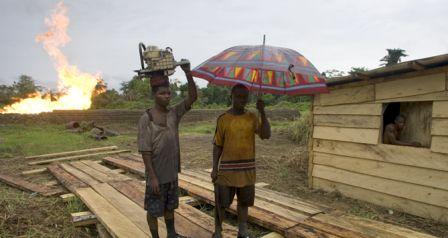
2020: Nigeria’s Flaring Reduction Target












Popular Categories




